
Rhetorical Excess
Two professionals debate craft, canon, and the aesthetics of disappearance

Some debates happen in faculty lounges. Others, over fried rice in Russafa, between two men who’ve made a career of silence.
A short divertimento on craft, canon, and the aesthetics of violence.
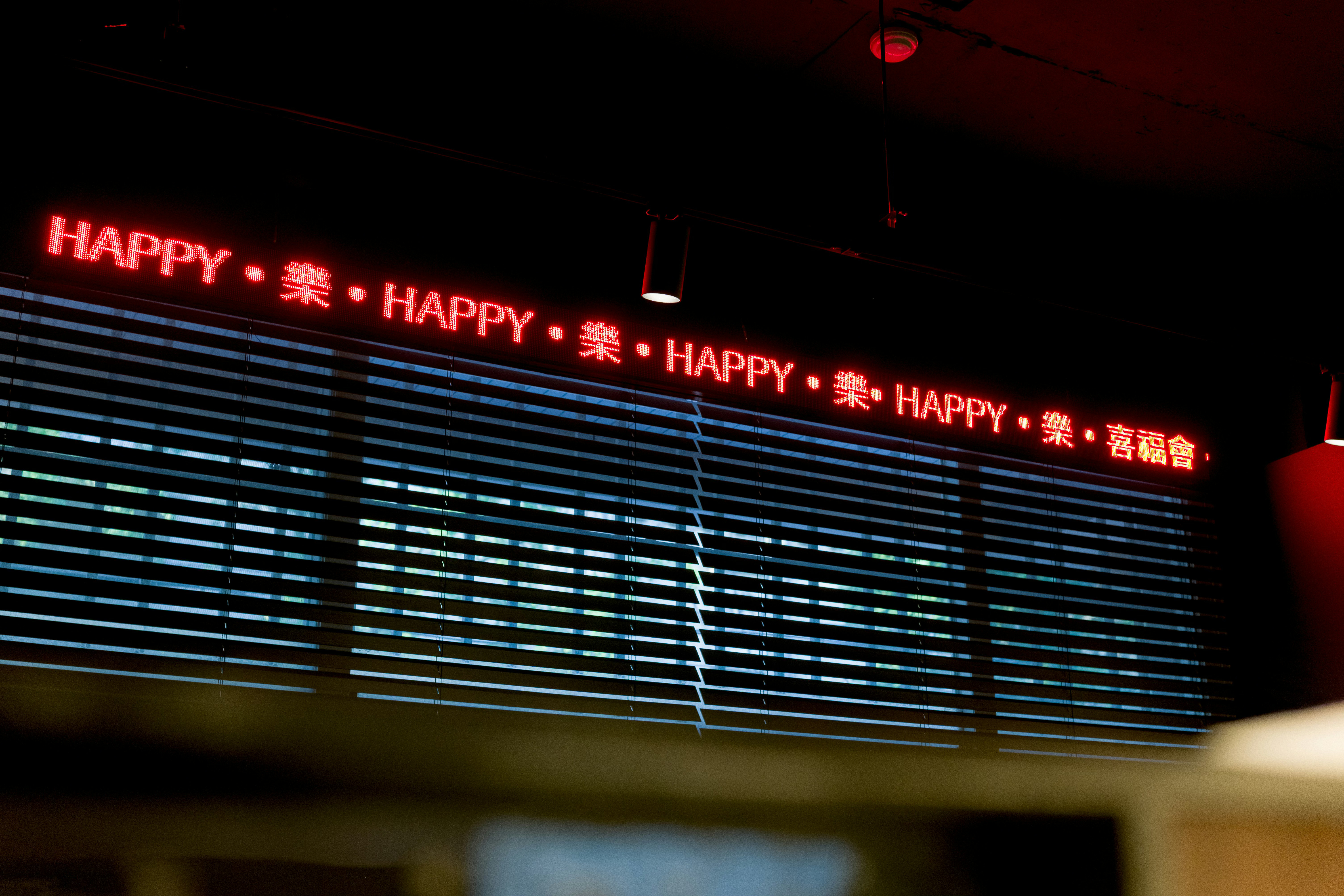
He found him in a Chinese restaurant in Russafa. Exposed concrete, red neon, lacquered ducks hanging in the window. The man was eating fried rice with the concentration of an accountant.
Martorell sat down across from him without asking. He was rubbing his thumb against his index finger, a tic he’d had for years.
“You’re the twenty-six stab wounds.”
The man looked up. Fifty years old, maybe more. The face of a family man, a youth soccer coach, a union rep.
“Excuse me?”
“The one at the port. The parking garage on Nou d’Octubre. The one on Sueca Street that was all over the news.”
The man set his chopsticks on the bowl.
“And who are you?”
“Someone interested in your work. From a, let’s say, formal perspective.”
“Formal.”
“Aesthetic, if you prefer.”
The man took a sip of water. He gestured for him to continue.
“Go on.”
Martorell crossed his hands on the table. The gesture of a professor before a tutorial.
“What you do is interesting but problematic. There’s a will toward presence in your work that comes across as, how to put it, excessive. The gesture shows too much. The author shows too much. And when the author shows, the work stops functioning as work and becomes document. Evidence. Proof.”
The man smiled.
“Continue.”
“The efficacy of this discipline, if you’ll permit the generalization, lies precisely in absence. The best work is work that doesn’t exist. That leaves no mark, no trace, no signature. The body as a closed text, self-sufficient, referring to nothing outside itself. Natural death. Accident. Disappearance. Closed readings that don’t invite interpretation.”
“And the twenty-six stab wounds?”
“The twenty-six stab wounds are a beginner’s mistake. A rhetorical excess. The work collapses under the weight of its own intention. Besides, the knife is a vulgar instrument. Too much noise, too much resistance from the material. Flesh tears unpredictably, ribs deflect the blade, tendons catch. You have no control over the stroke.”
The man tilted his head.
“What’s your instrument, then?”
“Nylon cord. Two millimeters in diameter. Transparent, resistant, clean. Leaves no fibers, no trace, requires no brute force. The cut is through progressive pressure, not impact. The material collaborates.”
“And you disappear.”
“The trachea gives way at a predictable point. The carotid closes without tearing. It’s all a matter of geometry and patience. Two minutes forty seconds on average. Absolute silence.”
“As opposed to my work.”
“The knife is noisy. The entry into flesh, the scrape against bone, the altered breathing, the sounds a body makes when it doesn’t understand what’s happening to it. With the cord there’s none of that. Just a soft whistle, almost intimate. And then, nothing.”
The man pushed the bowl toward the center of the table.
“Are you finished?”
“I just wanted you to be aware of the tradition in which you’re working. Or against which you’re working, apparently.”
“The tradition?”
“Thirty years of clean work. Cases that don’t exist because no one ever looked for them. Judge Fuster, 2008: heart attack in his sleep. The contractor from Torrent: disappeared, the wife collected the insurance. The journalist investigating City Hall contracts: car accident, tree, rain, bad luck. That’s the canon. That’s work that endures precisely because it’s not seen.”
The man leaned back in his chair.
“And you’ve come to explain that my work is inferior to yours.”
“I’ve come to explain that your work compromises all of us. That when you appear on the news with your butchery, the critics wrinkle their noses and you make people think of us. And we’ve spent decades building a poetics of invisibility that you destroy with every excess stab wound.”
The man nodded slowly. He touched his left wrist, a small gesture.
“A poetics of invisibility. I like that.”
“It’s not a turn of phrase. It’s a discipline.”
“Right. And what does that make me? The barbarian invading Rome?”
“If you want to put it that way.”
The man was silent for a few seconds. When he spoke, it was with disdain.
“There are twelve cases in València alone you don’t know about, between 2003 and 2018. Twelve clean, invisible, canonical works, as you’d say. Twelve impeccable stylistic exercises that didn’t leave a single comma out of place.”
Martorell said nothing.
“I spent fifteen years working within your tradition. Perfecting your poetics. Nylon cord, latex gloves, two minutes forty seconds on average. In and out. Absolute cleanliness. And you know what I remember from those fifteen years?”
“What.”
“The same thing you remember from your thirty. Nothing. The protocol. The motion. Perfect technique executed in a void. Like washing dishes. Like showering. Like anything else you do with your body while your mind is somewhere else.”
“Discipline.”
“And discipline isn’t art. It’s death of the soul. And you know it as well as I do, but you don’t dare admit it because if you do, you’ll have to reconsider thirty years of work. And that’s too much work for the ego.”
The man smelled his fingers. A slow, deliberate gesture.
“Twenty-six stab wounds. You want to know why twenty-six?”
“Because you lost control.”
“No. Because I counted them. One by one. Twenty-six consecutive decisions to continue. Twenty-six moments when I chose to be there, present, inside that room, with that person. And yes, the knife is unpredictable. The blade bounces where you don’t expect. The third blow hit a rib and deflected downward. The sixteenth found an artery and the blood came out under pressure, hot, with its own rhythm. The twentieth went between two vertebrae and the body arched in a way I’d never seen. All of this is noise, you say. You work like the cook back there. Ties up the duck, hangs it, waits for it to bleed out. Clean, yes. Industrial. My knife is a conversation; your cord is an assembly line.”
“Conversation?”
“Nylon cord doesn’t talk. It executes. The knife responds, resists, surprises. Flesh has texture, density, memory. Every body is different. With the knife you discover that. With the cord, you never will.”
Martorell looked at his hands.
“That’s chaos. Chance.”
“That’s being present. Every drop knows where it falls. Every stroke responds to the one before. I felt every stab wound. And I still feel them. Here, under the nails. Three weeks later, the smell is still there. A mix of copper and salt and something sweeter, like overripe fruit. Do you feel anything, from your thirty years of canon?”
“My work functions.”
“Your work disappears. Which is what you want. But disappearing and functioning aren’t the same thing. Nobody remembers the efficient ones. Il Mostro di Firenze killed sixteen people in sixteen years. They never caught him. But they remember him. They study his cuts, the ritual, the positioning of the bodies. There have been thousands who’ve killed more, better, without leaving a trace. Who knows them? Your work doesn’t look at anyone. It passes and is forgotten and it’s as if it never happened.”
“Invisibility is the objective.”
“Invisibility is cowardice. Are we really in a world where we only kill for money? Don’t you ever go to sleep thinking about that young man who decided to start killing because killing meant something back then?”
Martorell didn’t respond.
“Exactly.”
The man stood. He left a bill on the table. He walked toward the door, turned around.
“Thanks for the lesson in canon. Very instructive.”
Martorell didn’t move.
The red neon flickered over the lacquered ducks.
The waiter came to clear the bowls.
“Can I get you anything?”
Martorell looked at his hands. They were still. Perfectly still. No tic. They didn’t smell of anything.
“Yes,” he said. “A green tea with lime, please.”